
The Future Of Web Application Security: How AWS WAF Is Evolving?
In the evolving digital landscape, web applications are increasingly becoming targets of sophisticated cyber threats, requiring robust security mechanisms to mitigate risks effectively. The AWS Web Application Firewall (AWS WAF) is at the forefront of web security, offering enterprises a powerful defense against common exploits and emerging vulnerabilities. As cyberattacks become more advanced, AWS continues to enhance its web application firewall capabilities, ensuring comprehensive protection for businesses of all sizes. This article explores how AWS WAF is evolving to meet the future needs of web application security, addressing critical aspects such as automation, AI integration, enhanced rule sets, and scalability.
The Growing Importance Of Web Application Security
Web applications serve as primary gateways for businesses to interact with customers, manage data, and deliver services. However, this increased reliance also exposes them to cyber threats like SQL injection, cross-site scripting (XSS), and distributed denial-of-service (DDoS) attacks. The AWS Web Application Firewall plays a crucial role in defending applications by filtering and monitoring HTTP and HTTPS traffic based on customizable security rules.
As cloud adoption continues to rise, traditional security methods are proving inadequate against modern attack vectors. AWS WAF is evolving to address these gaps by leveraging machine learning, automated threat detection, and real-time analytics. Organizations are now looking for proactive security solutions that adapt to new threats, and AWS WAF is continuously advancing to meet these demands.
Enhanced Rule Sets And Managed Rules
One of the most significant improvements in the AWS Web Application Firewall is the expansion of managed rule sets. AWS provides pre-configured rules that help businesses mitigate common vulnerabilities without requiring in-depth security expertise. These rule sets, designed by AWS security experts, automatically update to counter the latest attack trends.
The integration of AWS WAF with AWS Marketplace allows users to access third-party managed rules that offer additional layers of security tailored to specific applications and industries. Organizations can now deploy industry-specific rule sets that protect against sector-based threats, ensuring more comprehensive coverage.
AI And Machine Learning In AWS WAF
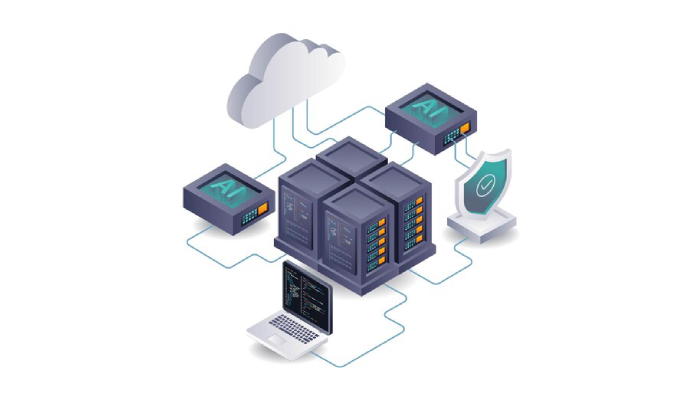
Artificial intelligence (AI) and machine learning (ML) are playing an increasingly vital role in web application security. AWS is integrating ML-driven threat intelligence into AWS Web Application Firewall to enhance its ability to detect and prevent attacks in real-time. By analyzing vast amounts of web traffic data, AWS WAF can identify anomalies, detect malicious requests, and apply automated mitigations before threats escalate.
Machine learning models in AWS WAF continuously learn from previous attacks, improving accuracy in threat detection while reducing false positives. This proactive approach minimizes manual intervention, allowing security teams to focus on higher-priority tasks rather than constantly tuning firewall rules.
Integration With AWS Security Services
As part of AWS’s broader security ecosystem, AWS Web Application Firewall seamlessly integrates with other AWS security services, including AWS Shield, AWS Security Hub, and AWS GuardDuty. This interconnected approach provides businesses with a multi-layered defense strategy that strengthens overall security posture.
- AWS Shield: Enhances AWS WAF’s capabilities by offering DDoS protection at both the network and application layers.
- AWS Security Hub: Centralizes security insights, allowing security teams to monitor AWS WAF alerts and incidents alongside other AWS security events.
- AWS GuardDuty: Provides continuous threat intelligence and anomaly detection, complementing AWS WAF’s real-time protection.
These integrations ensure a cohesive security framework where AWS WAF functions as a core component of a robust cybersecurity architecture. Organizations can leverage AWS’s extensive security ecosystem to build resilient web applications that can withstand sophisticated attacks.
Advanced Bot Mitigation Capabilities
With the increasing use of malicious bots to conduct automated attacks, bot mitigation has become a top priority for businesses. AWS Web Application Firewall now includes advanced bot mitigation features designed to detect and block unwanted bot traffic while allowing legitimate bots to access web applications.
AWS WAF’s bot control capabilities leverage machine learning to differentiate between good and bad bot traffic. This prevents credential stuffing, web scraping, and other bot-driven attacks that can compromise sensitive data and disrupt business operations. Organizations can customize bot mitigation policies based on their specific needs, ensuring legitimate user experience remains unaffected while blocking harmful bots.
Scalability And Performance Improvements
As businesses expand their digital presence, scalability in web security solutions becomes critical. AWS Web Application Firewall is continuously improving its scalability to handle large volumes of web traffic without impacting performance.
AWS WAF operates at the AWS edge locations, ensuring minimal latency while processing security rules in real time. The distributed nature of AWS WAF enables it to protect applications across multiple AWS regions without requiring manual configuration. As web applications experience traffic surges, AWS WAF automatically scales to maintain optimal security coverage.
The Future Of AWS WAF In Cloud Security
As cyber threats continue to evolve, AWS WAF is expected to integrate even more advanced security capabilities. Future developments may include:
- Deeper AI-Driven Security: Enhanced predictive analytics to identify threats before they materialize.
- Greater Automation: Reduced reliance on manual rule configurations through intelligent security policies.
- Expanded Threat Intelligence Feeds: Real-time global threat insights for proactive threat prevention.
- Zero Trust Security Enhancements: Stronger identity and access controls within AWS WAF policies.
AWS WAF is set to play an increasingly critical role in securing web applications against sophisticated cyber threats. Businesses that prioritize cloud security will benefit from AWS WAF’s continuous evolution, ensuring their web applications remain protected in an ever-changing threat landscape.
Conclusion
The AWS Web Application Firewall is rapidly advancing to meet the growing demands of web security. With AI-driven threat detection, managed rules, advanced bot mitigation, and seamless integration with AWS security services, AWS WAF is evolving into a more powerful and intelligent security solution. As cyber threats become more complex, businesses must leverage AWS WAF’s cutting-edge features to safeguard their web applications effectively. The future of web application security depends on adaptive, automated, and scalable defenses, and AWS WAF is leading the way in this transformation.